




Miracles can happen
What helps communities not only survive major disruption, but emerge stronger? Drawing on her experience with communities in Atlantic Canada, Donna Provoost reflects on four very different transformations and the ingredients they shared: local leadership, community knowledge, long-term support and, importantly, hope.
We are all looking for that new shiny thing, that innovation, that new approach or even a miracle to solve our problems. Well, sometimes, we need to look back to find it.
In the 1990s and early 2000s, I worked with communities in the east coast of Canada that were in complete collapse due to the closure of the Atlantic ground fishery. More than 30,000 fisher and plant worker jobs were lost overnight. While government provided income support and worker transition packages, these were short term measures.
What is interesting to consider is what factors helped some communities come through this disaster stronger than ever.
I reflected on four communities and how they managed the transition to remain vibrant places where people want to live, work and play:
Community 1: From fish processing to ready-made-meals
Started with regional development authority organising asset mapping and bringing people together to share strengths.
Set up community investment fund, recognised and built on local leadership.
Used existing plant infrastructure, skills and local agriculture bounty to switch products.
Good leadership and good luck meant they came in at the forefront of ready-made meals boom, and are now a strong thriving commercial centre.
Community 2: From neglected ghost town to thriving sports hub
Started with provincial rural planning that invited the community to apply for support, with funders open to what the community itself wanted.
Community leaders emerged and built on its past strength as a community of regional sports champions.
They rebuilt neglected infrastructure and incrementally added food and accommodation facilities.
The community became a regional hub for sporting events and conferences, with strong sense of belonging and pride.
Community 3: From harbour town to tourist haven
Started with a regional development authority working with tourism operators in the area to see if expansion could absorb any of the job loss.
This triggered a community-wide stocktake of their existing assets, including their history, culture and scenic environment, as well as its close proximity to a larger center.
Local assets were then matched with the trending growth in tourism. Fishing boats were converted to coastal and wildlife tours and dockside sheds became craft stores.
The community set a vision to celebrate the ‘coastal and rural experience’ and establish itself as a tourist haven.
Community 4: From fish processing to call centre expertise
Started with local union leaders from the closed plant organising others in the community to come together to save their community.
They consider their assets and sought to match them with economic opportunities that would be viable in a remote area.
The community drew on a unique asset – an educated fully bilingual population – to fill a niche in the expanding call centre market.
Determination by the community to pull together and survive meant they were prepared to adapt and seize opportunities.
Looking at all four communities tells me is that there is no one miracle solution. Each community needed to find their own way, based on their particular assets and leadership. Communities that want to survive can survive.
But here are my five key takeaways from this reflection:
- Transformation is possible
But it takes time. And it will look different in different places. - Leadership and ideas come from within the communities
But they might need a nudge and some support from local ‘infrastructure’ like local government, regional development organisations, or peak bodies in the area. - There are tools and support to accelerate the process
Asset mapping, future visioning, assessment of growth trends, collective impact. Tried and true processes are there to use. - Supporting transformation is cost-effective
Dealing with the social and economic consequences of the collapse of a community is a costly counterfactual for funders, and this can be used to negotiate support. - Hope matters
Hope is a key to transformational change. This is true for individuals and for communities. Just as hope can be eroded, it can also be strengthened when communities see a pathway towards their future, have influence over decisions, and receive appropriate support beyond the crisis.
So if a vision for the future, commitment over time, and stable and sufficient resourcing to support the community-led decisions can make miracles, then I can attest that miracles do happen!
But perhaps the real lesson is that these transformations aren’t miracles at all. They are the result of people, place and practice coming together over time. Local leadership, community knowledge, the right tools and processes, and support that enables communities to shape their own futures.
Inspiring Communities and Powerdigm work to support this kind of change, drawing on decades of experience, capability-building tools and community-led development practice.
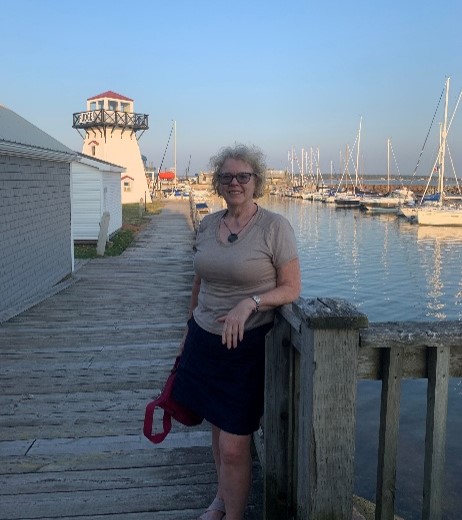
Donna Provoost is the Director of Powerdigm, the for-purpose research and consulting arm of Inspiring Communities. Prior to moving to Aotearoa in 2004, Donna worked in community economic development and social change in Atlantic Canada.