


Guild Street Housing Community
Guild Street Housing Community is showing how stable housing can become the foundation for connection, belonging and community leadership. Through the Child Rich Communities Learning Cluster, the team deepened its relationship-based approach, exploring how tamariki, rangatahi and whānau can shape the places they call home and create lasting change together.
Learning and Outcomes Story: Guild Street Housing Community
This story is one of four Learning and Outcomes Stories from the Child Rich Communities Learning Cluster (2025-2026).
| SNAPSHOT | |
| Location | Ōtautahi Christchurch |
| Focus of mahi | Creating an intentional housing community where tamariki, rangatahi and whānau experience belonging, connection and opportunities to shape the place they call home. |
| Who’s involved | Guild Street whānau, tamariki and rangatahi, Christchurch Methodist Mission Housing Team, including Laura Christie (Practice Lead & Social Worker), Annie Smith (Housing Operations Manager), René Demegilio (Community Development Worker), and community partners. |
| Key outcomes | – Tamariki have developed a strong sense of belonging, ownership and leadership. – Whānau have moved from housing instability towards connection, participation and self-determination. – Cultural identity has become a source of strength and pride. – Community relationships have strengthened both within Guild Street and with the wider community. |
The starting point
Guild Street Housing Community was established by Christchurch Methodist Mission and the Wayne Francis Charitable Trust with a vision of creating more than housing.
Many families arrived at Guild Street after experiencing housing insecurity, including transitional housing, emergency motel accommodation, overcrowded housing and unstable rental situations. While stable housing was an important starting point, the Guild Street team recognised that housing alone does not create belonging, wellbeing or community.
The challenge was to create a place where tamariki and whānau could build relationships, develop a sense of ownership and belonging, and actively shape the place they called home. The vision was not simply to provide housing, but to create the conditions where tamariki, rangatahi and whānau could flourish.
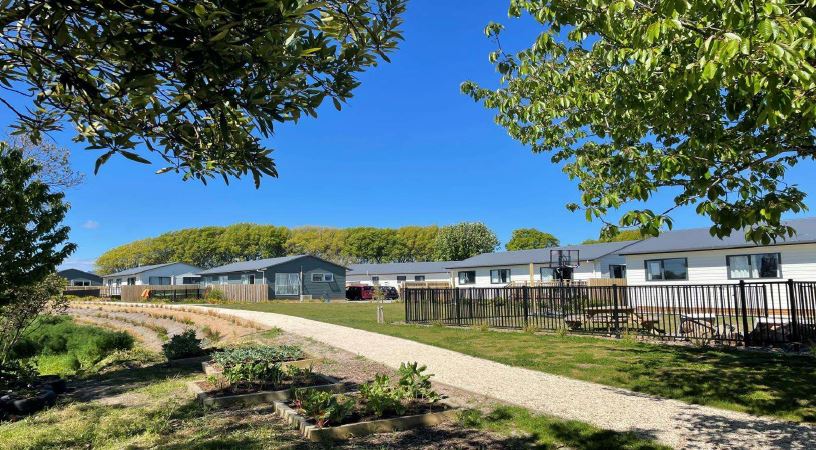
“Families have moved from crisis accommodation into stable long-term homes in a supportive community.”
The Learning Cluster provided an opportunity to reflect on what was already emerging at Guild Street and deepen the team’s understanding of how tamariki, rangatahi and whānau shape community life when they are trusted, listened to and supported.
What we wanted to learn
Guild Street joined the Child Rich Communities Learning Cluster to strengthen its community development practice and learn alongside others working to improve wellbeing for tamariki, rangatahi and whānau.
The team wanted opportunities to:
- Reflect on their practice and identify ways to strengthen their mahi.
- Build confidence using community development approaches and tools.
- Learn from others working in child-rich ways.
- Share and celebrate the positive impacts emerging within Guild Street.
- Reduce the isolation that can come with community-based practice.
- Explore how community-led approaches can further support tamariki, rangatahi and whānau to thrive.
At the heart of these goals was a belief that thriving communities are built through relationships, participation and opportunities for people to contribute. The Learning Cluster provided a chance to reflect on what was already working well and become more intentional about supporting tamariki and whānau leadership.
Existing strengths
Guild Street entered the Learning Cluster with strong foundations already in place.
A dedicated Community Development Worker, a community house and shared green spaces had helped create a place where people felt supported and safe.
Importantly, Guild Street already had a strong culture of listening and responding. Rather than delivering programmes to people, the focus was on building relationships and understanding what mattered to whānau and tamariki.
As the team reflected in their Expression of Interest, whānau and tamariki had become increasingly confident to speak about Guild Street themselves, rather than having staff speak on their behalf.
The intent
Guild Street’s vision was to create an intentional community grounded in connection and shared responsibility.
Through the Learning Cluster, the team wanted to deepen their understanding of how tamariki and rangatahi shape the communities they live in, and how adults can support that leadership to flourish.
Guild Street’s approach is grounded in a simple belief: communities already hold the strengths, knowledge and relationships needed to thrive.
The journey
Housing as a platform for belonging
Guild Street’s experience reinforced that housing alone does not create community.
As Annie reflected during the Learning Cluster:
“Housing development need to be more than just providing that bricks and mortar… but also the need to actually have a community alongside that housing.”
Alongside secure housing, the community house, shared spaces and the presence of a dedicated community worker created opportunities for people to connect and build relationships.
Belonging didn’t emerge because people lived next door to one another. It grew through everyday interactions, shared experiences, children playing together and opportunities to contribute. As relationships grew, so did people’s connection to the community.
What shifted:
- Increased participation in community life.
- Stronger relationships between whānau.
- Greater connection to place.
Why it mattered:
Stable housing created the foundation, but connection and belonging helped create a community where people wanted to contribute and support one another.
Tamariki became catalysts for connection
Children were not simply participants in community life. They helped shape it.
One of the strongest themes to emerge through the Learning Cluster was the role tamariki played in creating and strengthening community connections.
“The children were the catalyst for groups coming together.”
As children built friendships, played together and spent time in shared spaces, relationships between whānau began to grow too. For some families, their first connections with neighbours came through their children.
The Learning Cluster helped Guild Street become more intentional about recognising and supporting the leadership already emerging among tamariki.
“Being involved in this has really helped, I guess, focus our attention on tamariki and how we can be really intentional with that child-rich type environment versus just the whole environment.”
“There is a clear sense of belonging among the tamariki at Guild Street. They have made the community house their own.”
“The tamariki are the ones to show the visitors around the community.”
That ownership showed up in many ways. Children helped care for shared spaces, welcomed visitors, contributed ideas for improvements and increasingly saw themselves as active contributors to the place where they lived.
As René reflected,
“Children in the community are the centre of the relationships and the evolution of the community.”ognise the strengths they already carry and supporting them to step into their own mana.
What shifted:
- Greater confidence and leadership among tamariki.
- Stronger connections between families.
- Increased ownership of community spaces.
Why it mattered:
The change came from tamariki being trusted to contribute, influence decisions and shape their own community. As their ideas became visible in the places around them, their sense of ownership and belonging grew.
Listening, then responding
The Learning Cluster reinforced a simple but powerful shift in practice: listening first.
The playground, sandpit, basketball court and youth mural all began with conversations. Children and rangatahi were asked what they wanted, invited to contribute ideas, and encouraged to help care for the spaces they helped create.
When tamariki saw their ideas become reality, their sense of ownership and responsibility grew too.
Cultural identity became a source of strength
Guild Street is home to whānau from Māori, Samoan, Afghan, Tongan, Fijian and Pākehā backgrounds. Rather than treating diversity as something to manage, the community embraced it as a strength.
Community celebrations, shared meals and cultural events created opportunities for whānau to share traditions, learn from one another and strengthen connections.
Through these experiences, tamariki saw their own identities affirmed while learning about the cultures of others.
“Cultural identity has been a huge strength… it’s been a protective and strengthening factor.”
When tamariki saw their identities recognised and valued, confidence and belonging grew.
What shifted:
- Greater cultural pride and confidence.
- Increased understanding across cultures.
- Stronger sense of belonging for tamariki and whānau.
Why it mattered:
Cultural identity became a foundation for connection, wellbeing and resilience across the community.
From services to self-determination
Another important learning was the value of placing decision-making closer to whānau and tamariki.
Rather than deciding what people needed, Guild Street increasingly focused on listening and supporting people to make decisions for themselves.
Whānau chose which services they wanted to engage with, what activities they wanted to participate in, and how community spaces could be used.
The role of the community development worker shifted too. Rather than leading community life, the focus became supporting relationships, responding to community aspirations and stepping back where leadership was already emerging.
“Whānau decide which services they want to refer themselves to if they need them… they decide what activities they want to do.”
One of the strongest reflections from the Learning Cluster was the importance of slowing down and listening.
“This process has really taught us to slow down, to listen, to listen to our tamariki, listen to the whānau, and not feel like we have to rush, rush, rush.”
This learning strengthened Guild Street’s commitment to responding alongside people rather than on their behalf.
What shifted:
- Greater whānau ownership and decision-making.
- Increased neighbour-to-neighbour support.
- Growing confidence and self-determination.
Why it mattered:
Communities become stronger when people are trusted to shape their own futures, and when organisations learn to step back, listen and support rather than direct.
Learning through challenge
While stable housing created an important foundation, belonging, trust and connection took time to grow. The Learning Cluster reinforced that creating community requires more than buildings and services.
The team reflected on the importance of slowing down, listening deeply and creating opportunities for tamariki and whānau to shape community life in their own ways.
The journey reinforced that strong communities are built with people, not for them.
Turning points
Several moments stood out throughout the Learning Cluster journey:
- Tamariki helping shape community spaces through their ideas and aspirations.
- The development of the playground and basketball court in response to children’s voices.
- Tamariki becoming ambassadors for the community and proudly hosting visitors.
- Community celebrations strengthening cultural pride and understanding.
- Growing evidence of whānau making decisions, supporting one another and leading community life.
- A shift in relationships with the wider neighbourhood, from suspicion and uncertainty to familiarity, acceptance and friendship.
What changed?
For tamariki and rangatahi
- Increased confidence, leadership and participation.
- Stronger sense of belonging and ownership.
- Greater pride in their cultural identity.
- More opportunities to influence decisions affecting their lives.
For whānau
- Greater housing stability.
- Stronger relationships and social connections.
- Increased participation in community life.
- Greater confidence and self-determination.
For the community
- Stronger connections across cultures and generations.
- Increased community ownership and participation.
- Improved relationships with the wider neighbourhood.
- A growing culture of mutual support.
For practice
- Reinforced the importance of relationship-based, strengths-focused approaches.
- Strengthened understanding of tamariki as leaders and community builders.
- Deepened understanding that lasting change emerges when children’s voices are trusted and whānau leadership is supported.
- Provided opportunities to learn alongside other Child Rich Communities sites.
The Learning Cluster also encouraged Guild Street to pay closer attention to stories, relationships and the perspectives of tamariki themselves.
“It’s gathering those stories… hearing it from the voices of the tamariki has been really beautiful to hear.”
“We’re looking deeper really.”
Looking ahead
The Learning Cluster didn’t fundamentally change Guild Street’s direction. It helped bring greater clarity and intentionality to work that was already grounded in relationships, community development and trust in the strengths of tamariki and whānau.
One of the strongest insights from the journey was a reminder that tamariki and whānau already hold the strengths, knowledge and ideas needed to create positive change. The role of adults is to listen, respond and help create the conditions for that change to emerge.
Throughout the journey, one message kept resurfacing: when tamariki and whānau are trusted to shape their own community, positive change follows.
“The importance of having child rich communities needs to be intentional.”
One of the clearest examples of this thinking can be seen in René’s reflections on his role. Success isn’t measured by how much support people receive, but by how connected and self-determining they become.
“He dreams for the day he will be made redundant and no longer needed.”
The Guild Street team continues to support a future where tamariki, rangatahi and whānau increasingly shape and sustain the community themselves.
| Website | https://www.mmsi.org.nz/ |
| For more information contact | Housing Operations Manager, Annie Smith annies@mmsi.org.nz |