




Kotahitaka, Ōtepoti-Dunedin Community Hub
Kotahitaka Dunedin Community Hub is creating a welcoming place where tamariki and whānau can connect, participate and thrive. Through the Child Rich Communities Learning Cluster, the team strengthened its focus on listening, belonging and community leadership, while exploring how the hub can continue to grow in response to local strengths, needs and aspirations.
Learning and Outcomes Story: Kotahitaka, Whānau Āwhina Plunket Ōtepoti-Dunedin Community Hub
This story is one of four Learning and Outcomes Stories from the Child Rich Communities Learning Cluster (2025-2026).
| SNAPSHOT | |
| Location | Ōtepoti Dunedin |
| Focus of mahi | Creating a community hub where tamariki and whānau feel welcomed, connected and supported, and where community groups can come together and thrive. |
| Who’s involved | Whānau Āwhina Plunket’s Kotahitaka Community Hub in South Dunedin, led by Tina Mangos (Community Services Coordinator) and Catherine Caley (Community Services Manager), alongside Plunket staff, volunteers, tamariki, whānau and a growing network of community groups. |
| Key outcomes | – Increased connection and belonging for tamariki and whānau. – More community-led activities responding to local needs and interests. – Growing confidence and leadership among volunteers and community members – Stronger understanding of how to gather and respond to whānau voice. |
The starting point
Whānau Āwhina Plunket is Aotearoa New Zealand’s largest health and wellbeing provider for tamariki under five and their whānau. Alongside Well Child Tamariki Ora services, Plunket supports confident parenting, connected communities and healthy environments where children and families can thrive.
In November 2024, Whānau Āwhina Plunket opened Kotahitaka, its new community hub in South Dunedin. Bringing together clinical services, community services, child car seat services, parenting support and administration under one roof, the hub created a central place where whānau could access support, connect with others and participate in community life.
The vision extended beyond delivering services. The team wanted to create a place where families felt welcome, where community groups could gather, and where tamariki and whānau could build confidence and a sense of belonging.
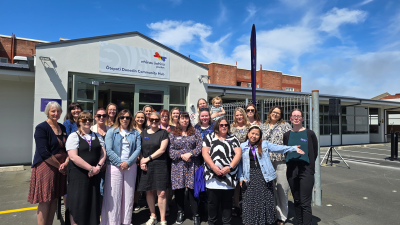
“Kotahitaka was created as a one stop shop for families in a central location.”
The Learning Cluster came along at an important time. The hub was still finding its feet, new groups were beginning to use the space, and the team was curious about what it would take to create a place that genuinely reflected the strengths, needs and aspirations of the community around it.
“We were keen to work with the community to make this their place.”
What we wanted to learn
Kotahitaka joined the Child Rich Communities Learning Cluster to strengthen their understanding of community-led practice and learn alongside others working to improve wellbeing for tamariki, rangatahi and whānau.
The team was particularly interested in the role connection plays in helping families thrive.
They wanted to better understand how community spaces can reduce isolation, build confidence and create opportunities for people to support one another. They were also curious about how to involve whānau more actively in shaping the hub as it grew.
Questions included:
- How do we know if families feel connected and welcome?
- How do we identify gaps and respond to emerging needs?
- How do we hear from people who are not yet coming through the door?
- How do we make sure the hub reflects what local families actually want and need?
- How do we create opportunities for people to contribute, not just participate?
At the heart of these questions was a desire to create a place that felt shaped by the community rather than simply operated by an organisation.
Existing strengths
The hub had been intentionally designed to be welcoming, accessible and family-friendly. Community rooms, play spaces, free parking and a central location helped remove barriers and create opportunities for people to gather.
It didn’t take long for people to start finding their way to the space. Rainbow whānau, Tongan families, premature pēpi support groups, community playgroups, paediatric outreach services and a range of other organisations began making use of the hub.
Listening was already part of the way Kotahitaka worked. Rather than deciding what families needed, they looked for gaps and paid attention to what people were telling them.
“We didn’t want to duplicate what was already out there. We looked for the gaps and responded to what people told us they wanted.”
There was also a strong understanding that supporting children means supporting the adults around them.
While tamariki played, parents and caregivers connected. Conversations happened over cups of tea. People shared stories, advice and encouragement. The team recognised that when adults feel connected and supported, children benefit too.
“We wanted to make it a place for connection. It’s not just about tamariki play but about supporting the confidence and wellbeing of parents and caregivers too.”
The intent
Kotahitaka’s vision was simple, to create a place people wanted to come back to. A place where tamariki felt comfortable and confident. A place where parents and caregivers could connect with others. A place where community groups felt welcome and supported.
“The goal is connection and confidence. Everyone should feel welcome and supported.”
From the beginning, the hub aimed to be a place where different communities felt welcomed and represented. Creating opportunities for connection wasn’t only about bringing people together. It was also about creating spaces where people could connect with others who shared similar experiences, cultures or life stages. At the same time, the hub offered opportunities for different communities to connect with one another.
The Learning Cluster offered time to pause, reflect and think more deeply about how those connections were forming and what helped them grow.
The journey
Creating a place for connection
As more people began using the hub, relationships started to grow. Some families arrived for a playgroup. Others came for a health appointment, parenting support or a community activity. Many stayed because of the connections they made along the way. Word spread. New groups arrived and families began returning week after week.
Before long, the hub was busy with playgroups, community activities and the sounds of tamariki exploring and playing. Familiar faces became friends. Families began seeing each other across different activities and throughout the week. For some, Kotahitaka became part of their regular routine.
What shifted:
- More families participating in activities and events.
- Stronger relationships between whānau.
- Increased opportunities for social connection and peer support.
Why it mattered:
Connection helped reduce isolation and created opportunities for families to support one another outside organised activities.
Listening for the gaps
One of the strongest themes to emerge through the Learning Cluster was the importance of listening.
The team kept asking themselves a simple question: Who’s not here yet?
The question prompted conversations about Indian families, refugee communities, solo parents and families living locally who may not yet have found their way through the door.
Community feedback also helped shape what happened inside the hub. New activities emerged through conversations rather than formal planning processes. An intergenerational playgroup was one example of an idea that grew from listening to what people were asking for.
What shifted:
- More activities responding directly to community interests.
- Increased awareness of underrepresented groups.
- Greater confidence in adapting and responding.
Why it mattered:
The hub continued evolving alongside the community rather than expecting the community to adapt to the hub.
Tamariki voice and confidence
The Learning Cluster prompted the team to pay closer attention to how tamariki experienced the space.
Children were encouraged to choose what they wanted to play with, explore activities at their own pace and engage with the environment in ways that reflected their interests.
“The children get to choose what they want to play with.”
Staff noticed children becoming more confident over time. They explored further, engaged more independently and developed a stronger sense of familiarity with the space.
“This activity shows children their voice and opinion matters.”
Parents noticed it too. Children who felt safe and comfortable were more willing to explore, interact and try new things.
Catherine reflected that she could often hear the squeals and happy vocalisations of tamariki from her office when playgroups were running. For her, those sounds were a reminder that children felt comfortable, engaged and excited to be there.

What shifted:
- Increased confidence and independence among tamariki.
- Greater opportunities for choice and participation.
- Stronger sense of belonging within the hub.
Why it mattered:
When children’s ideas and preferences are valued, they learn that their voice matters.
Growing confidence to lead
One of the most significant moments came when volunteers stepped forward to keep playgroups running while Tina was recovering from surgery.
“The groups didn’t stop. People simply got on with it.”
For the team, this felt like an important shift. It showed that people felt confident enough to step in and help out to keep things going.
The experience prompted conversations about how people move from attending activities to helping shape them.
How do families know their ideas are welcome? How do people see themselves as contributors rather than consumers?
As one reflection captured:
“How do we help whānau to know they are empowered to make a change in the system? How do we help them step into reclaiming this power?”
What shifted:
- Increased volunteer leadership.
- Greater community ownership of activities.
- Stronger confidence among whānau and community members.
Why it mattered:
Communities become stronger when people feel confident contributing their skills, ideas and leadership.
Learning through challenge
As a new community hub, one of the ongoing challenges was balancing a clear vision for the space with a commitment to letting the community shape its direction.
The team worked hard to avoid duplicating existing services, instead listening for gaps, responding to emerging needs and creating opportunities for community members to take ownership of activities and groups.
The journey reinforced that community-led spaces evolve over time and are strongest when people feel a genuine sense of ownership and belonging.
Turning points
A number of moments stand out as important turning points:
- New community groups finding a home within Kotahitaka.
- The creation of new activities in response to community feedback.
- Volunteers stepping forward to sustain playgroups and activities.
- A growing focus on children’s voice and participation.
- Increased reflection on who was not yet represented within the hub.
- Growing confidence among whānau and volunteers to contribute ideas and leadership.
What changed?
For tamariki
- Increased confidence and independence.
- Greater opportunities for choice and participation.
- Stronger sense of belonging.
- More opportunities for their ideas and preferences to be recognised.
For whānau
- Increased social connection and support.
- Reduced isolation.
- Stronger relationships with other families.
- Greater confidence to contribute ideas and get involved.
For the community
- More diverse groups using the hub.
- Stronger community connections.
- Increased participation and shared ownership.
- Greater recognition of the hub as a place of support and belonging.
For practice
- Strengthened understanding of child-rich and community-led approaches.
- Increased awareness of whose voices are being heard and whose may be missing.
- Greater focus on listening, responsiveness and participation.
- A deeper understanding of how connection, confidence and participation grow through relationships.
One of the strongest learnings was that meaningful engagement starts with relationships.
People are far more likely to share ideas, contribute and lead when they feel welcome, valued and connected.
Looking ahead
The Learning Cluster did not change Kotahitaka’s direction. Instead, it strengthened and sharpened work that was already underway.
The team continues to focus on creating a place where people feel comfortable, supported and connected. A place where new families are welcomed, where community groups can gather, and where tamariki and whānau feel they belong.
Looking ahead, there is ongoing curiosity about who is not yet connected and how the hub can continue reaching out to communities whose voices are not yet fully represented.
The team also wants to keep creating opportunities for whānau and community members to shape what happens within the hub.
Throughout the journey, one message kept resurfacing: Connection matters.
When people feel connected, supported and valued, they are more likely to participate, contribute and thrive.
At the heart of Kotahitaka’s work remains a simple commitment:
“Tamariki and whānau are at the heart of everything we do.”
| Website | https://www.plunket.org.nz/ |
| For more information contact | Community Services Coordinator, Tina Mangos tina.mangos@plunket.org.nz |