


Moving decision-making closer to whānau
What does it really look like to move decision-making closer to whānau? Hear how Guild Street Housing Community and Waiapu Kids Merivale Whānau Aroha are putting whānau-led practice into action, and what they’re learning along the way.
What does it really look like to move decision-making closer to whānau and mokopuna?
In our latest Child Rich Communities online kōrero, we heard directly from two learning cluster sites doing exactly this work in practice. Guild Street Housing Community in Ōtautahi Christchurch, and Waiapu Kids Merivale Whānau Aroha through Anglican Care Waiapu.
From Guild Street, we heard from Laura Christie and Annie Smith, who are part of the Christchurch Methodist Mission housing team. From Waiapu Kids Merivale Whānau Aroha, we heard from Erin Batley, Centre Manager within Anglican Care Waiapu.
What follows is a practical snapshot summarising the kōrero and their work in action.
Guild Street: a place to call home
At Guild Street, what began as a social housing initiative has grown into an intentional, multicultural community grounded in connection and shared responsibility.
Developed by the Christchurch Methodist Mission in partnership with the Wayne Francis Charitable Trust, the project was designed to go beyond providing housing. Alongside 15 warm, secure homes, the model includes a community house, a dedicated community development worker, and an activities budget, all aimed at supporting long-term wellbeing for whānau.
The community itself is culturally rich and diverse, with whānau from Māori, Samoan, Afghan, Tongan, Fijian, and Pākehā backgrounds. Many arrived from housing insecurity, including transitional motel living, overcrowded homes, or unstable rentals. The intention from the outset was to create a place where whānau could not only find stability, but build connection, confidence, and a sense of belonging.
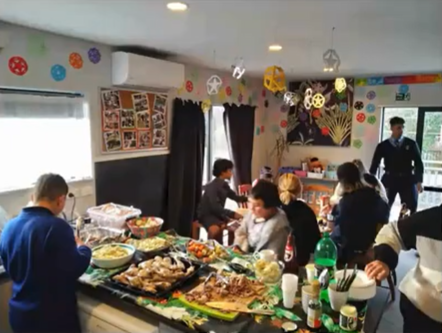
“Families have moved from crisis accommodation into stable long-term homes in a supportive community.”
Annie Smith
The model combines safe, affordable housing with a community development worker and shared community space. Over time, this has enabled a shift from instability to connection and belonging.
Tamariki at the centre
At Guild Street, tamariki have been at the heart of the community from the beginning. Their ideas, relationships, and leadership have helped shape both the physical space and the way the community functions.
By creating space for tamariki voice and participation early on, the project has supported a strong sense of ownership and belonging. Over time, tamariki have become key connectors within the community, building relationships across cultures and contributing to a shared sense of pride in the place they call home.
If you had a magic wand and could make a wish and make things better for you and your whānau, what would you wish for?
This led to real outcomes: a playground, a basketball court, and spaces shaped alongside tamariki, not simply built for them.
“There is a clear sense of belonging among the tamariki at Guild Street. They have made the community house their own.”
— Laura Christie
Today, tamariki take on visible leadership roles in the community.
The tamariki are the ones to show the visitors around the community.
Cultural identity as a strength
Cultural identity has been a key strength within the Guild Street community. From the outset, the diversity of whānau has been recognised and valued, with residents from Māori, Samoan, Afghan, Tongan, Fijian, and Pākehā backgrounds. Rather than being something to navigate, this diversity has become a foundation for connection and learning.
Cultural identity has been a huge strength… it’s been a protective and strengthening factor.
Community-led events and celebrations have played an important role in this, creating opportunities for whānau and tamariki to share their cultures and learn from one another.
Events promote unity, awareness of different cultures, religions, customs, and sensitivities and allow for acceptance of diversity within the community.
For tamariki, this has had a visible impact.
Through the tamariki being able to clearly see their cultural identity affirmed… this has enabled them to feel more confident, have a greater sense of belonging, and improve their overall wellbeing.
Over time, this has contributed to a strong sense of pride and belonging across the community, where diversity is not just present, but actively celebrated.
From services to self-determination
The community has shifted away from service dependence toward whānau-led decision-making.
Whānau decide which services they want to refer themselves to if they need them… they decide what activities they want to do.
The role of the community development worker has also evolved.
The role moves the project beyond just housing into active community development.
This relational approach has also transformed relationships with the wider neighbourhood.
The progression here is from neighbours feeling suspicious and concerned to neighbours becoming familiar with the whānau at the complex and friendships growing.
Waiapu Kids Merivale Whānau Aroha: re-centering whānau voice
At Waiapu Kids Merivale Whānau Aroha, the shift has been less about a single project and more about an organisation-wide commitment to re-centering whānau voice in everyday practice.
Part of Anglican Care Waiapu, the centre sits within a wider network of early childhood and social services, with a strong focus on wraparound support for whānau. The intention has been to move beyond traditional service delivery models, toward a more relational, community-led approach grounded in aroha, rongo and hari, at the heart of which is a vision of Te Oranga Ake o Te Iwi o Te Ao (human flourishing).
This has meant rethinking how relationships are built, how decisions are made, and how whānau are supported to lead.
“Whānau are seen as experts in their own lives and relationships thrive through aroha and connection.”
— Erin Batley
This includes drawing on local mātauranga, embedding Te Tiriti learning across the organisation, and creating shared cultural experiences where whānau and kaimahi learn together. Rather than delivering for whānau, the focus is on building a sense of belonging and collective identity that strengthens the whole community. Key to this has been to consider how the centre is resourced to enable this to happen which resulted in the creation of a Kaitūhono position who acts as a hoa haere, walking alongside whānau to support them to achieve oranga ake.
Cultural identity has also become a pathway for connection and confidence. Shared learning, such as waiata and local curriculum frameworks gifted by iwi, has created opportunities for whānau to engage in ways that feel meaningful and grounded. These moments build pride, strengthen relationships, and contribute to a deeper sense of belonging for both tamariki and their whānau.
From asking to truly hearing
A key learning was that asking for aspirations is not enough.
Whānau really struggled with that and didn’t always find a way to articulate… it can sometimes be rather difficult to hope and dream when we’re struggling for kai, when we’re struggling for housing.
So the approach changed.
Having more casual whānau time as a group… in our whānau space in the garden outside doing walks and having that kōrero together.
These relational spaces created the conditions for aspirations to emerge naturally.
Acting on whānau voice
What stood out strongly was how whānau voice translated into organisational action.
You’ve heard that, you’ve picked it up, you’ve actioned it… that information has gone back through all of the organisation.
This included shifts across leadership, practice, and organisational culture.
Greater whānau confidence in sharing aspirations… increased participation in hui and decision making… strengthened relationships and sense of belonging… and tamariki flourishing.
Community-led development in practice grounded in Te Ao Māori
At Merivale Whānau Aroha, community-led development is grounded in Te Ao Māori and brought to life through relational, everyday practice that centres whānau, whakapapa, and collective wellbeing.
Rather than designing services for whānau, the focus has been on creating the conditions for whānau to lead. This includes taking a strengths-based approach, building relationships over time, and embedding local mātauranga, tikanga, and values into how the centre operates.
Practice is shaped by a strong sense of connection to place and people, including drawing on iwi-led frameworks for education and honouring mana whenua. Cultural identity is not treated as an add-on, but as a foundation for belonging, confidence, and connection.
A key part of this has been creating intentional spaces for whakawhanaungatanga through hui, where whānau can come together, build relationships, and share kōrero in ways that feel safe and unhurried. These hui support trust to develop over time and create the conditions for whānau voice to emerge more naturally.
As Erin shared, this has meant shifting away from formal processes toward more relational ways of engaging.
“Having more casual whānau time as a group… in our whānau space in the garden outside doing walks and having that kōrero together.”
— Erin Batley
These spaces reflect a more collective way of working, where kōrero, trust, and relationships are prioritised. They create the conditions for whānau voice to emerge, rather than being extracted through structured processes.
It’s about widening those relationships… building our village.
This “village” reflects a collective approach grounded in whanaungatanga, where relationships extend beyond the centre and into the wider community. Tamariki and whānau remain connected through these networks as they move through different stages of their journey.
Through this, community-led development becomes something lived and experienced. It is seen in the way relationships are formed, how decisions are shared, and how mana is upheld across the community.
Key themes emerging
Across both sites, several consistent themes emerged:
Relationships and whanaungatanga are foundational
Whether through everyday interactions, shared spaces, or whakawhanaungatanga hui, both sites emphasised the importance of taking time to build trust, connection, and a sense of belonging.
Relational trust is the foundation. Without it nothing else works.
Start with whānau voice and lived experience
Both sites highlighted the importance of starting where whānau are at.
This means listening deeply, creating safe and unhurried spaces for kōrero, and recognising that aspirations emerge over time, not always through formal processes.
Starting with where whānau and communities are at… readiness and listening.
Cultural identity is a strength
Cultural identity was consistently described as a source of strength, connection, and confidence.
At Guild Street, diversity is actively celebrated through shared experiences and cultural events. At Merivale, identity is embedded through local mātauranga, iwi frameworks, and everyday practice.
Across both, tamariki are growing up in environments where their identities are seen, affirmed, and valued.
Community-led development grounded in Te Ao Māori
Community-led development is not delivered as a programme, but lived through practice.
At Merivale, this is grounded in Te Ao Māori through tikanga, mātauranga, and a strong focus on collective wellbeing. Practices such as whakawhanaungatanga hui create space for connection, trust, and shared decision-making.
At Guild Street, similar principles are seen in how relationships are built, how tamariki are centred, and how community life is shaped together.
Tamariki are catalysts for change
Tamariki play a central role in shaping their communities.
Their ideas, relationships, and leadership contribute to a strong sense of belonging and connection, with ripple effects across whānau and the wider community.
The tamariki have been a huge catalyst in the success story of Guild Street.
Act on what you hear
Listening is only the first step. What matters is how organisations respond.
Both sites demonstrated a commitment to acting on whānau voice, with changes reflected not just at the frontline, but across wider systems and organisational practice.
You’ve heard that, you’ve picked it up, you’ve actioned it… not just once, but that information has gone back through the whole organisation and the whole organisation has then said, ‘okay, is this what whānau need? Okay, we’ll all do that then to support you.
This work is relational, complex, and ongoing
This mahi is not linear.
It requires time, flexibility, reflection, and a willingness to sit with complexity. Relationships remain at the centre, even when the work is challenging.
It is transformative work and it’s meaningful but it’s complex… progress is non-linear and relationships remain at the heart.
Celebrate progress and build momentum
Taking time to reflect, pause, and recognise progress is essential.
Small wins, moments of pride, and visible change help sustain both whānau and those doing the mahi.
Taking time to reflect and look at the journey and celebrate the small successes.
— Pekehaua Amohau, Waiapu Kids Merivale Whānau Aroha Centre, Kaitūhono
“Moving decision-making closer to whānau is not just a practice change. It is a commitment to equity, mana-enhancing practice and recognising whānau as kaitiaki in their own lives.”
You can watch this awesome kōrero here.
All quotes are taken directly from the CRC Online Kōrero (2026).