


Te Pae Urungi, part of Wesley Community Action
Te Pae Urungi, part of Wesley Community Action, walks alongside tamariki, rangatahi and whānau in Wellington's eastern suburbs, creating opportunities for people to build confidence, strengthen leadership and realise their aspirations. This story explores how relationships, trust and reflective practice are helping grow whānau-led change, often through the quiet 'seeds of change' that emerge over time.
Learning and Outcomes Story: Te Pae Urungi, part of Wesley Community Action
This story is one of four Learning and Outcomes Stories from the Child Rich Communities Learning Cluster (2025-2026).
| SNAPSHOT | |
| Location | Eastern suburbs of Wellington |
| Focus of mahi | Supporting tamariki, rangatahi and whānau to build confidence, strengthen wellbeing, develop leadership and achieve their aspirations through community-led, relationship-based practice. |
| Who’s involved | Te Pae Urungi is one of the community development teams within Wesley Community Action. The kaimahi of Te Pae Urungi are Tualie Smith, Te Amo Parata and Dean Tipene Wilson-Karu. They were joined in the Child Rich Community learning space by Wesley’s Community Innovation Lead, Kena Duignan. |
| Key outcomes | – Increased confidence and leadership among tamariki, rangatahi and whānau. – Greater opportunities for whānau and rangatahi to shape programmes and activities. – Stronger understanding of how voice, trust and relationships contribute to positive change. – Increased reflection on the role of mana motuhake, aspirations and whānau-led change. – Greater recognition of the long-term impact of relationship-based practice and the “seeds of change” being planted through everyday mahi. – Stronger commitment to creating spaces where people feel heard, valued and empowered to lead their own journeys. |
The starting point
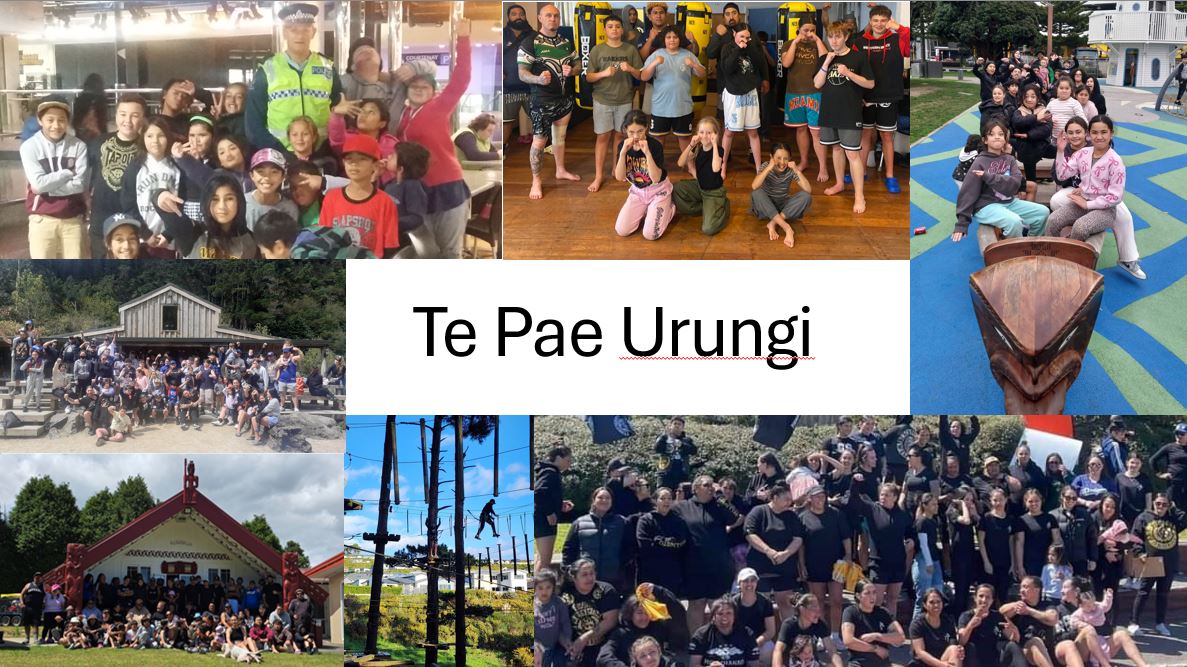
Te Pae Urungi is a community development team within Wesley Community Action, based in the eastern suburbs of Wellington. The team works alongside whānau and rangatahi to strengthen wellbeing, build leadership and support people to achieve their hopes and aspirations.
Many of the team have walked similar journeys to the people they support. Their lived experience sits alongside professional expertise and community leadership.
Through programmes focused on health and wellbeing, emotional intelligence, personal development, employment pathways, fitness and advocacy, they support whānau to become the best versions of themselves.
At the heart of their work is a simple belief: whānau are the experts in their own lives.
The role of Te Pae Urungi is not to tell people what to do. It is to walk alongside them, create opportunities, remove barriers and support people to recognise their own strengths and potential.
The Child Rich Communities Learning Cluster arrived during a period when the team was already deeply engaged in supporting whānau and rangatahi facing significant challenges. Concerns around isolation, self-harm, disengagement from education and the growing pressures facing whānau were increasingly visible.
At the same time, the team remained focused on possibility, asking what it would take for tamariki and rangatahi to grow up feeling safe, connected, heard and hopeful about their futures.
What we wanted to learn
Te Pae Urungi was not looking for a new programme or engagement model. The team already had deep relationships within their communities and years of experience in community-led development.
Instead, they saw the Learning Cluster as an opportunity to pause.
“We are interested in learning. We want to use this opportunity to make sure we take time out to do reflection.”
The team wanted to:
- Create more space for reflection within their practice.
- Explore how they could continue learning and adapting their work.
- Better understand how to support tamariki and rangatahi to dream big and achieve their aspirations.
- Share their learnings and experiences with others.
- Stay focused on the needs, hopes and wellbeing of mokopuna.
The team recognised that when you are immersed in responding to the everyday realities facing whānau, it can be difficult to step back and notice what is changing. The Learning Cluster offered an opportunity to do just that.
Existing strengths
Relationships were already at the centre of Te Pae Urungi’s work. The team are deeply connected to the communities they serve and hold leadership roles within those communities themselves. A particular strength is the trusted relationships they have built with club and gang whānau, enabling them to engage in ways that are meaningful and grounded in long-term connection. Trust has been built over years of showing up, walking alongside people and staying present through both challenges and successes.
Their work spans fitness programmes, wellbeing initiatives, emotional intelligence programmes, a financial wellbeing programme, leadership development, advocacy and practical support for whānau navigating complex systems.
What connects all of this mahi is a belief that people already hold the strengths and solutions they need. The role of Te Pae Urungi is to help create the conditions where people’s strengths, confidence and mana can flourish.
Many of the people they work alongside see themselves reflected in the team. There is a shared understanding of challenge, resilience and transformation that creates trust and authenticity.
All of the team bring lived experience to their work and often share their own story of growth and change.
“I am proof that positive change is possible. Through connection, wellbeing, leadership and aroha, we uplift each other.”
The Wesley Way also provides a strong foundation for practice. Guided by principles such as manaakitanga, kaitiakitanga, whanaungatanga and rangatiratanga, the team works from the belief that whānau are the experts in their own lives.
“Relationships and integrity are the biggest tools I use in my everyday mahi.”
The intent
The intent of Te Pae Urungi’s work is not to create dependence on services. It is to support people to recognise their own strengths and step more fully into their own mana and leadership.
“Real change only happens when it is led by the people seeking that change.”
This commitment is reflected across every aspect of the team’s work, from Mana Rangatahi and Bro Talk through to fitness programmes, financial wellbeing support and whānau advocacy. Whether working with rangatahi, parents or wider whānau, the focus remains the same. To create opportunities for people to lead their own journeys.
The journey
Walking alongside whānau
One of the strongest themes throughout the Learning Cluster was the importance of walking alongside people rather than directing them.
The team regularly supports whānau navigating housing challenges, financial hardship, justice systems, Oranga Tamariki processes and other complex situations. Rather than positioning themselves as experts with solutions, they focus on helping people recognise their own strengths and make decisions that align with their aspirations.
One story shared during the Learning Cluster involved a wahine who returned after a seven-year journey. Through persistence and advocacy, she worked towards having her tamariki returned to her care.
For the team, her story was a powerful reminder that meaningful change often takes time.
“We don’t know how much we are sowing seeds of change for whānau in the work that we are doing as growth is not always immediate.”
The Learning Cluster created space to notice and celebrate these quieter forms of change that can easily be missed when responding to the day-to-day realities facing whānau.
What shifted:
- Greater reflection on the importance of patience and long-term relationships.
- Increased awareness of the many ways change can emerge over time.
- Stronger confidence in trusting the process.
Why it mattered:
Not all growth is immediate. Sometimes the most significant changes are only visible years later.
Supporting leadership and aspirations
Across programmes such as Mana Rangatahi and Bro Talk, the team creates opportunities for people to develop confidence and leadership.
A recurring theme throughout the Learning Cluster was the importance of helping rangatahi imagine different possibilities for themselves and their futures.
The team spoke openly about concerns for young people experiencing isolation, disengagement and uncertainty. At the same time, they remained focused on possibility.
“How do we change the narrative of the stories they tell themselves or that have been handed down to them?”
Programmes are designed not simply to provide activities but to help participants recognise their strengths, identify aspirations and build belief in their ability to achieve them.
The team see this every day through the fitness and kickboxing programmes.
“It’s a good outlet for these kids, not just for fitness but for their mental health. I want to teach values they can take home, to school, and out into the community.”
For some rangatahi, the first step is simply finding a safe place where they feel accepted.
“We’ve created a safe space for rangatahi who might not feel confident going to a mainstream gym. It’s free, it’s local, and it’s about building confidence and connection.”
Graduations from programmes such as Bro Talk became important moments for celebrating growth, recognising progress and acknowledging the leadership already present within whānau and communities.
Much of this work is about helping people recognise the strengths they already carry and supporting them to step into their own mana.
What shifted:
- Increased opportunities for leadership development.
- Greater focus on aspirations and long-term goals.
- Stronger confidence among participants.
Why it mattered:
When people begin to see new possibilities for themselves, new pathways begin to emerge.
Creating spaces where voice matters
The Learning Cluster reinforced the team’s commitment to ensuring whānau, tamariki and rangatahi have genuine influence over the programmes and initiatives that affect them.
At Wesley Community Action, consultation is not treated as a one-off exercise. Voice is built into the way programmes are designed, delivered and evaluated. Rangatahi help shape activities. Whānau contribute ideas and feedback. Programmes evolve in response to what people say they need.
“Rangatahi hold the key to the direction that we move in.”
This approach reflects a wider belief that people are far more likely to engage when they can see themselves in the work and have opportunities to influence it.
What shifted:
- Increased reflection on how voice is gathered and responded to.
- Stronger understanding of the relationship between voice and leadership.
- Greater confidence in whānau-led approaches.
Why it mattered:
When people know they are being heard, they are more likely to participate, contribute and lead.
Planting seeds of change
Throughout the Learning Cluster, the team often returned to the idea of planting seeds.
Not every conversation creates an immediate breakthrough. Not every programme produces visible change straight away. Sometimes growth happens quietly. Sometimes people return years later.
Sometimes the impact of a conversation only becomes visible when a person is ready to act on it.
“We don’t know how much we are sowing seeds of change for whānau in the work that we are doing as growth is not always immediate.”
The Learning Cluster helped create space to recognise these quieter forms of change and to celebrate progress that may otherwise go unnoticed.
What shifted:
- Greater appreciation for incremental change.
- More opportunities to recognise growth and progress.
- Increased confidence in the value of relationship-based practice.
Why it mattered:
Small shifts can create lasting change over time.
Learning through challenge
Many of the tamariki, rangatahi and whānau connected to Te Pae Urungi were navigating significant challenges, including isolation, financial hardship, disengagement from education and complex life circumstances.
Progress was not always immediate or visible. Supporting people through difficult situations while recognising that change cannot be rushed required patience, persistence and trust in the process.
As the team often reflected, many of the seeds planted today may not be visible until much later.
Turning points
Looking back, several moments stand out as important turning points:
- Bro Talk graduations and the stories of change shared by participants and whānau.
- Conversations about rangatahi wellbeing, belonging and aspirations.
- Reflecting on the role of vulnerability and not always having the answers.
- Exploring how whānau voice shapes programmes and practice.
- Recognising the long-term impact of relationship-based work.
- Deepening understanding of mana motuhake and leadership.
What changed?
For tamariki and rangatahi
- Increased opportunities to lead and contribute.
- Greater confidence to express aspirations and ideas.
- More opportunities to develop leadership skills.
- Increased understanding that they are valued and that their voice matters.
For whānau
- Increased confidence navigating systems and challenges.
- Greater recognition of their own strengths, capabilities and mana.
- Stronger opportunities to shape programmes and support.
- Increased sense of hope and possibility.
For the community
- Stronger local leadership.
- Increased participation in community-led initiatives.
- More opportunities for collective learning and growth.
- Greater visibility of strengths within the community.
For practice
- More intentional reflection.
- Deeper understanding of the importance of pausing and learning.
- Increased confidence in whānau-led and strengths-based approaches.
- Greater awareness of how small changes contribute to larger transformation over time.
Looking ahead
The Learning Cluster reinforced what Te Pae Urungi has long believed. Change happens through relationships. It happens when people are listened to, when strengths are recognised, and when whānau are supported to lead their own journeys.
Looking ahead, the team remains committed to creating opportunities for tamariki, rangatahi and whānau to grow, learn and thrive.
They also want to continue sharing their learning with others, strengthening reflective practice and supporting future generations to develop the confidence, skills and aspirations needed to shape their own futures.
At its heart, Te Pae Urungi’s story is about recognising the strengths that already exist within whānau, tamariki and rangatahi.
Through relationships, trust, encouragement and opportunity, the team works alongside people as they strengthen their mana, realise their potential and build the futures they want for themselves and their families.
“Nothing is better than seeing our tamariki thriving and watching parents drive their own success.”
| Website | https://www.wesleyca.org.nz/ |
| For more information contact | Community Innovation Lead, Kena Duignan kduignan@wesleyca.org.nz |